AnimalEnvironmentPeople

How Can We Coexist with Wild Elephants? The Solution is Agroforestry System, Habitat Restoration, and Collaboration

By: Sisca Wiryawan

In the mid-1980s, there were only 44 elephant populations on the island of Sumatra. Hedges et al. (2005) stated that there were only three elephant populations in Lampung Province.

Since elephants are wild animals protected by the state, the habitat of this mammal, known by its Latin name Elephas maximus, is in national parks. These conservation areas are not fenced off because the principle of conservation is to maintain the environment as natural as possible so as not to hinder the lives of protected wild animals. As the cost of fencing is too expensive, it is better to allocate the cost of fencing to elephant conservation.

Production forests are located in the border of the national parks, which are conservation areas for elephants and other protected animals. Conflicts usually occur near the border area between national parks and production forests.

Palm oil is a high-value export commodity grown in production forest areas. Many palm oil plantation entrepreneurs prefer to expand monoculture plantations. However, monoculture plantations are more susceptible to pests and diseases than agroforestry systems.

Environmentally Friendly Agroforestry System

By environmentally friendly agroforestry, palm oil products will not be banned from import into the European Union. Agroforestry systems are appropriate with the concept of sustainability, especially the environmental aspect. Although this system produces lower productivity compared to monoculture plantations, the quality of the products are better.

It is advisable to intensify agriculture to overcome the low productivity of agroforestry systems, for example, by using high-quality seeds, compost, organic pesticides, and so on.

Palm oil plantations’ staffs are forbidden to burn the forest for cultivation area. The forest burning will endanger the safety of animals, including elephants. It is potential to decrease the habitat if the burning area is expanding to the National Park.

Elephant Feed Plants Planted in National Parks

To prevent elephant herds from damaging palm oil plantations, elephant feed crops should be planted in national parks, such as durian trees, lime trees, and others.

If elephants are full of feed, it will reduce the potential for elephants to wander into plantation or agricultural areas. This minimizes the risk of conflict between humans and elephants.

Sustainability Aspects of Oil Palm Plantations and Potential Conflicts

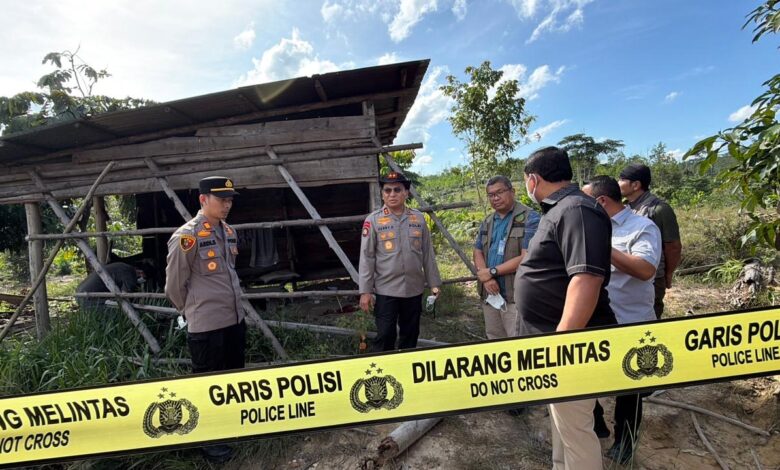
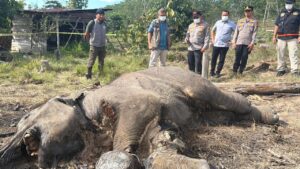
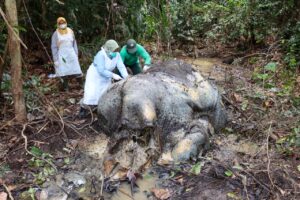
There have been several cases of mysterious elephant deaths near palm oil production forests. The dead elephants were inhabitants of Mount Leuser National Park, Aceh. The causes of death of these elephants were iron wire snares, poison, and others.

Palm oil plantations should consider various sustainability aspects, including environmental aspects. Excessive expansion of production forest areas means reducing elephant habitat areas, which could potentially cause elephants to have difficulty finding food.

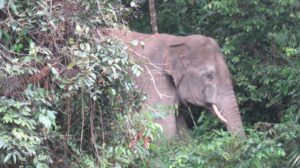
According to WWF Indonesia (2018), an adult elephant can consume around 136 kg of food per day. Meanwhile, elephants roam over a wide area, covering up to 170 km2 per day, which has the potential to cause conflict between elephants and humans.

“Elephants never forget.”

Elephants usually follow the same travel routes. It is possible for elephants to cross parts of the National Park that have been converted into production forests. Therefore, the potential for conflict between plantation workers in production forests and elephants is quite high.

A sustainable economic system does not sacrifice the lives of elephants and reduce their habitat area. Palm oil products that are not produced using environmentally friendly systems, such as those that destroy protected forest areas or national parks, kill elephants, and so on, are banned from export to the European Union and certain countries.

Too many elephant deaths due to human conflict will cause an imbalance in the ecosystem. This will ultimately have a negative impact on the lives of local residents.

According to WWF Indonesia (2018), elephants naturally disperse seeds when they consume plants and defecate. This seed dispersal is a form of natural reforestation. With their wide roaming range of 170 km2/day, elephants carry out this natural reforestation effectively.

Conflict Between Humans and Elephants Around National Parks in Lampung Province

Lampung Province has two national parks, namely Bukit Barisan National Park and Way Kambas National Park, several protected forests, and production forests.

Protected forests are areas where logging is prohibited in order to protect water sources and several environmentally sensitive areas. Meanwhile, production forests are forest areas planted with production crops.

Production forests are divided into three types, namely limited production forests, permanent production forests, and conversion forests. Conversion forests can be converted into agricultural land and human settlements.

With an area of 3,568 km2, Bukit Barisan National Park is the third largest protected area in Sumatra. The national park ranks first among the four priority areas for elephant conservation in Sumatra.

Way Kambas National Park, covering an area of 1,235 km2, is the second priority area for Sumatran elephant conservation. There are many conflicts between humans and elephants in this animal protection area.

It is necessary for residents living in the national park to relocate from the area so that elephant habitats are not disturbed by human activities. Additionally, restoration of the elephants’ natural habitat is required (Hedges et al, 2005).

Illegal Elephant Hunting for Ivory

Many elephants are hunted for their ivory. Forest rangers should be vigilant in uncovering cases of elephant deaths that are suspected of damaging crops or threatening the lives of residents. In fact, the main reason elephants are killed is because their ivory is highly valuable and traded on the illegal market. The ivory trade network is not only domestic, but also international, requiring collaboration with authorities in other countries.

More CCTV cameras are needed in national parks, especially in areas bordering national parks and production forests. Therefore, the Indonesian government can investigate conflicts between humans and elephants.

Collaboration of Stakeholders

Elephant conservation requires collaboration between stakeholders such as the government, NGOs, forest rangers, police, communities surrounding national parks, researchers, and private plantation companies.

The Stakeholders needs to solve the problem of potential conflicts between elephants and humans, the illegal ivory selling, habitat restoration relating to production forest increase, so on.

Funds for Elephant Conservation

The costs of elephant conservation, such as the research costs, the cost of relocating elephants in conflict-prone areas, the cost of installing CCTV, and so on, should not only come from the government budget, but also from mandatory Corporate Social Responsibility (CSR) funds from plantations or agricultural industries. In addition, conservation funds can be collected through crowdfunding.

Empowering Communities Around Production Forests Close to National Park Areas

To improve the economy of the surrounding inhabitants, it is necessary to empower the inhabitants through collaboration between the National Park, Karang Taruna, NGOs, local governments, or other parties. For example, creating souvenirs (dolls, bags, wallets, hats, T-shirts, mugs, etc.) featuring the elephant mascot.

Since there are several National Parks in Sumatra, the elephant mascot is designed differently for each National Park. This serves as the National Park’s branding. Profits from souvenir sales are set aside for elephant conservation. Most importantly, the profits are given to the surrounding inhabitants. Therefore, they can live peacefully alongside elephants.

Inhabitants’ homes are also painted in vibrant colors and decorated with elephant paintings. There are aesthetic elephant ornaments made from eco-friendly materials for Instagrammable spots. This is to enhance the society’s love for elephants.

As coffee is a local wisdom product in Aceh, Lampung, so on, the  packaging should use elephant symbol. Inhabitants need to consider they live near the habitat of elephant. They should appreciate and love elephants.

May elephant conservation efforts improve. Elephants deserve to live happily and comfortably on the Indonesian earth.

Source:

Hedges, S, Tyson, MJ, Sitompul, AF, Kinnaird, MF, Gunaryadi, D, Aslan. 2005. Distribution, status, and conservation needs of Asian elephants (Elephas maximus) in Lampung Province, Sumatra, Indonesia. Biological Conservation. 124: 35-48.

WWF. 2018. Mempertahankan Kekayaan Bangsa yang Hampir Punah, Gajah Sumatra. Retrieved from http://www.wwf.id/id/blog/mempertahankan-kekayaan-bangsa-yang-hampir-punah-gajah-sumatera#:~:text=Gajah%20ini%20memiliki%20daya%20jelajah,alami%20sehingga%20memperbaiki%20kondisi%20hutan.


____________

The author is the second-place winner of the article competition in the English language category, held collaboratively by Geopix, Lestariana, and Kompasiana in commemoration of World Animal Day 2025

Related Articles

Leave a Reply

Your email address will not be published. Required fields are marked *

Check Also
Close
Back to top button